
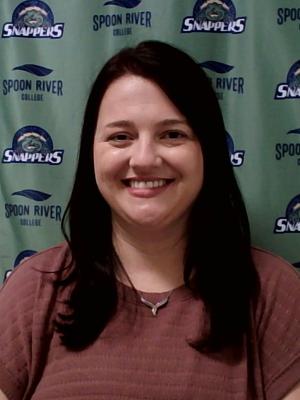
Abby Beck
Faculty Profile
Sociology Faculty
Education/Degrees:
M.A. – Western Illinois University, 2016
B.A.&S. – Western Illinois University, 2014
A.A. – Spoon River College, 2012
Classes Taught:
- SOC 100 – Introduction to Sociology
- SOC 110 – Contemporary Social Problems
- SOC 215 – Racial & Ethnic Relations
- SOC 225 – Sociology of Sex and Gender
Campus and Community Involvement:
I plan to be actively involved in campus activities and initiatives at SRC! I believe that being involved in the campus community is an important part of the college experience.
As a faculty member, I want to support students by showing up for the events, organizations, and initiatives that are important to them. I hope to be someone students see as part of the SRC community, not just someone they see in the classroom. I look forward to getting involved, supporting student activities, and being part of the experiences that make SRC a community.
About Me:
I grew up in a small town outside of Macomb and attended a small high school. The thought of going on to a larger school was overwhelming to me. Honestly, even starting at SRC was overwhelming at first. I quickly learned, however, that I was surrounded by faculty who genuinely cared about their students and staff who were there to help. SRC became a place where I found my path.
I have wanted to be a teacher for as long as I can remember. As a young child, I would come home from school and re-teach the lessons my teacher had given that day to my imaginary class. As I got older, though, I struggled to figure out what I wanted to teach. My first semester at SRC, I didn’t take a sociology course. My second semester, I did….and it changed everything.
It was in Michael Maher’s classes that I discovered how transformative sociology could be. I began to see myself and the world around me differently. Michael, as an instructor, and the discipline of sociology helped me understand and answer questions I had been asking for years. At the same time, I was discovering what I wanted to teach. My experience at SRC undoubtedly shaped who I am as an educator and is a big part of why I believe sociology can be transformative.
I have had several proud moments throughout my educational journey. During my time at Western Illinois University, I was honored to receive the Sociology Department Scholar Award and the Won Hurh Thesis Award for an outstanding sociology thesis. I also graduated Summa Cum Laude and served as a Marshall for the College of Arts and Sciences graduation ceremony.
Some of my proudest moments, however, have come through teaching. I especially value when students demonstrate a perspective shift after learning to apply the sociological lens to themselves or the world around them. Those moments tell me that they are not simply learning sociology…they are practicing it.
I am also incredibly proud when I see students develop their skills over the course of a semester. Watching students put in the work and become stronger communicators, particularly in their writing, is incredibly rewarding. Seeing that growth reminds me why I wanted to become a teacher in the first place.
Why Spoon River College?
My journey with SRC began as a student. I started my post-secondary education here, and after earning my Master’s degree in Sociology from Western Illinois University, I returned to SRC as a part-time faculty member in 2016.
Over the years, I have had the opportunity to serve SRC students in several different roles. In addition to teaching, I have worked as a Student Success Coach and a TRIO Advisor, which gave me the opportunity to support students outside of the classroom and see firsthand the different challenges and experiences students bring with them to college. Those experiences have shaped the way I approach teaching and strengthened my belief in the importance of supporting the whole student.
In August 2026, I had the opportunity to become a full-time faculty member. Coming back to SRC has been especially meaningful because I have experienced this college from so many perspectives: as a student, an advisor, a student success coach, a part-time faculty member, and now a full-time faculty member.
I love being part of the SRC community. I value community colleges and the important role they play in creating opportunities for students. I value our students, faculty, and staff, and I appreciate the sense of community that makes SRC such a special place. I am proud to have started my own educational journey here, and I am grateful that I now have the opportunity to help students navigate their own path.
My Educational Philosophy:
I believe education, sociology in particular, can be transformative. My goal as an educator is not simply for students to learn sociological concepts, but to develop a sociological lens for understanding themselves, their everyday experiences, and the world around them.
I believe strongly in engaged pedagogy. Students learn best when they are active participants in the classroom. For me, this means creating a classroom where students are participating in the learning process, engaging with one another, and connecting what they are learning to the world around them. I want students to take sociology out of the classroom and begin recognizing it in their everyday lives.
Success in my class looks like students developing skills that will serve them well beyond the classroom. I want students to strengthen their writing and communication skills, develop the ability to think critically, understand and apply the sociological perspective, and gain a deeper understanding of themselves and the world around them.
Success also looks like students learning to step outside of their own opinions and experiences and examine an issue through the scientific perspective of sociology. When a student can take something they encounter in their everyday life, set aside their initial assumptions, and use sociological concepts and evidence to analyze it, they are practicing sociology, and that is a huge success in my mind!
Advice for Students:
First, I would remind students that they are not on their own. College is not always easy, and many students will face challenges along the way.
Also, utilize the support systems available to you here at the college. Communicate with your professors. If you are struggling in a class, have questions, or are dealing with something that is affecting your ability to be successful, reach out! Your professors and the college’s student support services are here to help you.
Lastly, I would also encourage students to get involved on campus whenever they have the opportunity. Join a club, attend an event, meet new people, or find something that interests you. Some of the most meaningful parts of the college experience can come from the connections you make and the experiences you have along the way.